How to Track Spending: All You Need to Know

Nicolas Cepeda
Financial Analyst at Truehold - A Specialist in Real Estate Finance
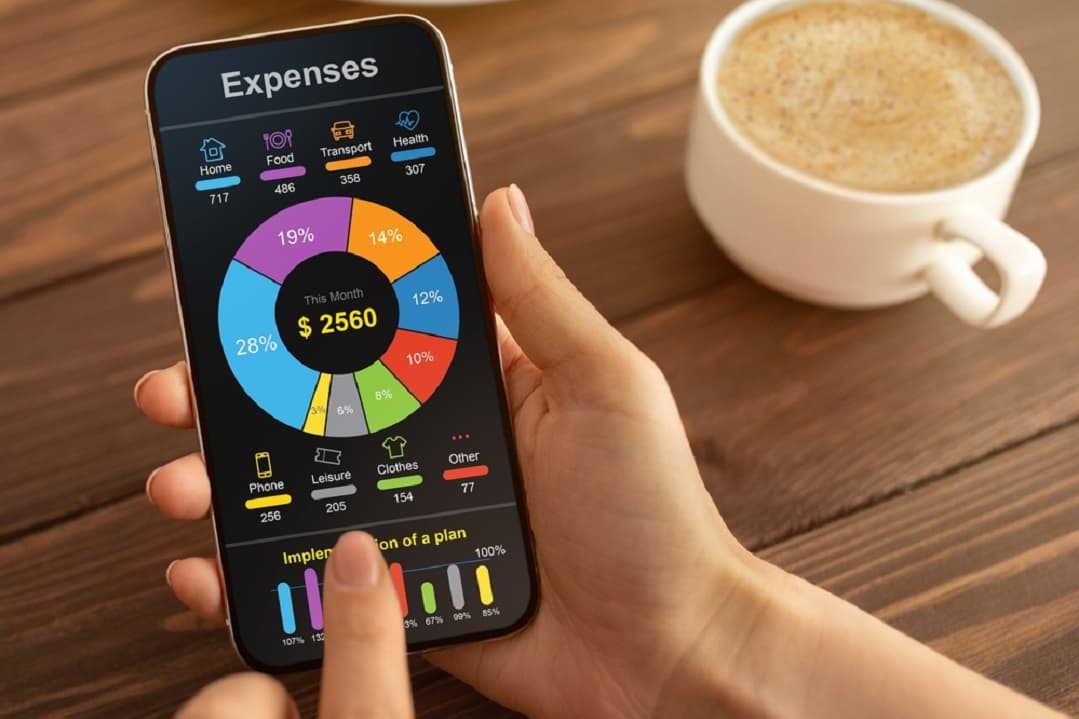
There’s a common saying: You can’t manage what you can’t measure. Effectively, this expression means in order to change, improve, or replicate a strategy, you need to know how –– and why –– the strategy did or didn’t work in the first place. When it comes to expense management, this age-old expression feels every bit as relevant. We’re all familiar with the dreadful feeling of checking your bank account after a fun-filled weekend, not quite ready to embrace reality. We all do the same mental gymnastics; if you don’t log in to your mobile banking app to survey the damage, it’s almost like the damage doesn’t exist! On the other hand, it could somehow be far worse than you had imagined. Schrodinger’s checking account, if you will.
As challenging as embracing reality may be in these situations, tracking spending can be the one thing standing between you and your long- and short-term financial goals, and learning how to track spending effectively is a crucial step in family financial planning and your road to financial wellness. If you’re ready to stop wincing each time you check your bank account and start making strides toward the financial future you deserve, keep reading for some proven strategies.
The Importance of Tracking Spending
When you log in to your mobile banking app after a weekend and fear the outcome, your money is controlling you –– whether you realize it or not. And by learning how to track your spending, understanding your spending habits, and recognizing how to divert your spending toward things that are in service of your financial goal, you can once again seize control over your hard-earned dollars. This doesn’t mean that tracking spending eliminates all “fun” purchases, however, as certain budgeting strategies create room specifically for non-essential spending.
Steps to Track Spending
But long before you can create a budget to help you accomplish your goals, you have to keep track of your spending behaviors –– and there are several steps to ensure you’re tracking spending wisely.
Log Your Income and Regular Expenses
As is the case when building a budget, you need to first understand what you’re working with. When income lands in your bank account, be it from your salaried 9-5 or your sporadic side gig, you must ensure it’s accounted for. If your compensation is more consistent, establishing your average income won’t be an issue. However, those who live on tips or have gotten used to chasing down invoices should establish an average to base their income on –– relying on a more conservative estimate rather than a best-case-scenario ballpark number.
With that figure outlined, continue on to your regular monthly expenses. These should include consistent, essential costs, like rent, utilities, phone bills, and other non-negotiables. Though these elements of your spending may not fluctuate as often as other nonessential purchases, they’re still equally important to consider when tracking spending.
Take Note of Every Purchase
With your less fungible expenses established, you can move on to tracking, well, everything else. Trips to the grocery store, fuel-ups at the gas pump, gym memberships, and splurge-y cups of artisanal coffee should all be accounted for, even the ones that seem too small to be significant. In fact, these small purchases might be holding you back in a big way, as these so-called microtransactions can add up over the course of a given month.
If you’re finding yourself reflecting on the countless $5 charges which have taken up room on your bank statement, you’re not alone. Many of us are guilty of these celebratory purchases, which usually come on the tail of a financial accomplishment (“I was so good last week! I’ve earned this.”) However, when it comes to tracking spending and getting on track toward your goals, rethinking the way you see these seemingly small purchases is crucial.
Learn more about Truehold's flexible sale-leaseback
Click hereExamine Your Existing Spending Habits
While Starbucks is a good starting point, tracking spending effectively will require a critical reappraisal of nearly every spending category –– and doing your best to spot both good and bad habits. After combing through your monthly (or weekly, or daily) purchases, you might find that you’re more likely to dine out and overspend on pay day. With restaurant meals costing more and more each day, cooking your celebratory feast at home could save you hundreds of dollars each month, which can be applied toward paying down debts, padding your emergency fund, or making more meaningful splurges.
“Good” behaviors should be noted, too, and recognizing positive spending patterns can help you channel some of that energy into other categories of your finances.
Find a Routine for Tracking Spending
For those wondering how to track spending, repetition is perhaps the most important step. Saving (and spending) specialists will tell you that, similar to getting into wellness routines like exercising and drinking more water, creating financial wellness habits will take work, and tracking spending is no exception. If you’re just getting started tracking your spending, check in as routinely as possible while you gain a better understanding of your habits. After you’ve gotten a feel for tracking your spending, you can decrease the frequency of your check-ins –– ensuring that you’re still making time to reevaluate. If you were looking for a place to squeeze in a celebratory coffee or glass of wine, your solo-spending-tracking date is as good a time as any!
If even semi-regular spending evaluations don’t fit your schedule, there are also countless tools at your disposal that will make tracking spending easier. Apps like Mint securely connect to your bank account, automatically organizing purchases by spending category. Once you have your established budget, you can adjust these category limits to receive notifications when you’re about to over-spend. Then, at the end of each week, month, and year, you receive detailed reports which paint the full spending picture.
3 Ways to Track Spending
The steps above offer a rough outline for beginners interested in tracking spending, but those looking for a more advanced approach may consider one of the strategies below.
1. The Deceptively Simple Approach
With some of the tools we have mentioned (and others we are about to use) at your disposal, it can be easy to write off the approaches which savers, spenders, and budgeters have used for decades. But for the right person, these tools can still be every bit as effective. No computers, software, or apps are necessary.
One popular strategy, the envelope method, is a strategy we have long suggested for those building their first-ever budget –– and it works just as well for tracking spending. The envelope strategy is exactly what it sounds like, allowing you to budget by putting money (literally or figuratively) into envelopes and limiting your spending to only what the envelope contains. The tracking you do, therefore, is effectively monitoring the envelopes themselves; the thinner the envelope, the higher your spending.
While the truly old school version of this strategy leans on using cash for most (or all) of your spending, that simply isn’t a reality for most of us. Maintaining a notebook with your “envelopes” and updating as you spend is a useful alternative that accomplishes the same end goal. With that said, if you can adhere to the classic, cash-based approach, your spending habits, savings, and financial goal will thank you.
2. Excel, Google Sheets, or Other Digital Tools
Though many swear by analog approaches like the above envelope method, there’s a reason why accounting firms and businesses of all sizes employ digital spreadsheets for their number-crunching. Both Excel and Google Sheets allow users to customize spreadsheets according to their unique spending habits, and update instantaneously before a purchase has even cleared the bank.
With these programs, you can adjust for weekly, monthly, or yearly views to guarantee you’re seeing every angle of your spending, and through the use of various formulas, you can watch your spending categories and percentages automatically update. Your only limitation is your willingness to learn the ins and outs of these infinitely customizable platforms, which, for even the brightest minds, can sometimes feel like actual rocket science.
Want to skip right past the learning curve and go straight to tracking spending? Fortunately, both Excel and Google Sheets have house-made templates designed to get you tracking as soon as possible –– and budget-minded independent creators have also designed a number of free and paid templates which can help your cause. For a look at several different expense tracking tools, the folks at NerdWallet have compiled a series of templates to meet most of your budgetary needs.
3. Let an App Do the Work
We mentioned the Mint app earlier, but this hardly scratches the surface of the iceberg that is the world of apps for tracking spending. The reality is there is a wide world of saving, spending, and budgeting apps, and the best one for you will likely come down to both your needs and preferred style of tracking spending. Some apps, like Goodbudget, even offer you a digital take on the envelope method, accessible from your computer or your mobile device. If you’re hesitant about linking your account to an expense tracker app, EveryDollar allows you to manually input both your income and spending over the course of the month. With that said, both Goodbudget and Mint leverage bank-grade security, according to their websites, meaning they’re every bit as safe to use as your own mobile banking app.
While Goodbudget and EveryDollar provide countless benefits for those looking to build a budget, Mint is likely the best tracking tool (and all-rounder) out there. But no matter which app or accounting software you choose, you’ll be on track toward a better understanding of your spending and closer than ever to achieving your financial goals.
Disclaimer: Truehold has no affiliation with Mint –– or any of the other app mentioned in this article –– we just really stand by this app as a tool for tracking spending!
Tracking Spending: The Final Word from Truehold
While tracking spending is especially valuable to those assembling a monthly budget or chipping away at incredible, long-term goals such as financial planning for retirement or college financial planning for your kids, the benefits of keeping a watchful eye on your spending are available to just about anyone. For one: Tracking your spending gives you a clearer idea of your habits, including ones you hadn’t even recognized. By monitoring your spending, you get a zoomed-out image of your overall financial picture, which can ultimately bring certain things into better view.
By tracking spending, you also ensure that your hard-earned money is actually being applied toward the things in life which bring you joy and fulfillment. There’s no greater financial wake-up call than feeling limited in your spending, only to realize that the money was there –– it was just spent on the wrong things.
So no matter your situation, your goals, or your habits, put the above information and start tracking your spending. It just might change your life.

Nicolas Cepeda
Financial Analyst at Truehold - A Specialist in Real Estate Finance
Nicolas Cepeda is a financial analyst with Truehold’s Real Estate Investment team, responsible for analytics and strategic decision making in the management of Truehold’s real estate portfolio. Nicolas has dedicated his career to residential real estate and is particularly focused on evolving solutions for homeowners and tenants. Nicolas holds a Masters in Engineering Management with a focus in Real Estate Finance and a range of experiences working with leading residential investors. Nicolas is a family-oriented individual and the proud uncle of 2 nieces. On the weekends you can find Nicolas on the soccer field or at his piano.
.jpg&w=3840&q=75)

.jpg&w=3840&q=75)
.jpg&w=3840&q=75)