Home Equity Loan Disqualifications

Nicolas Cepeda
Financial Analyst at Truehold - A Specialist in Real Estate Finance
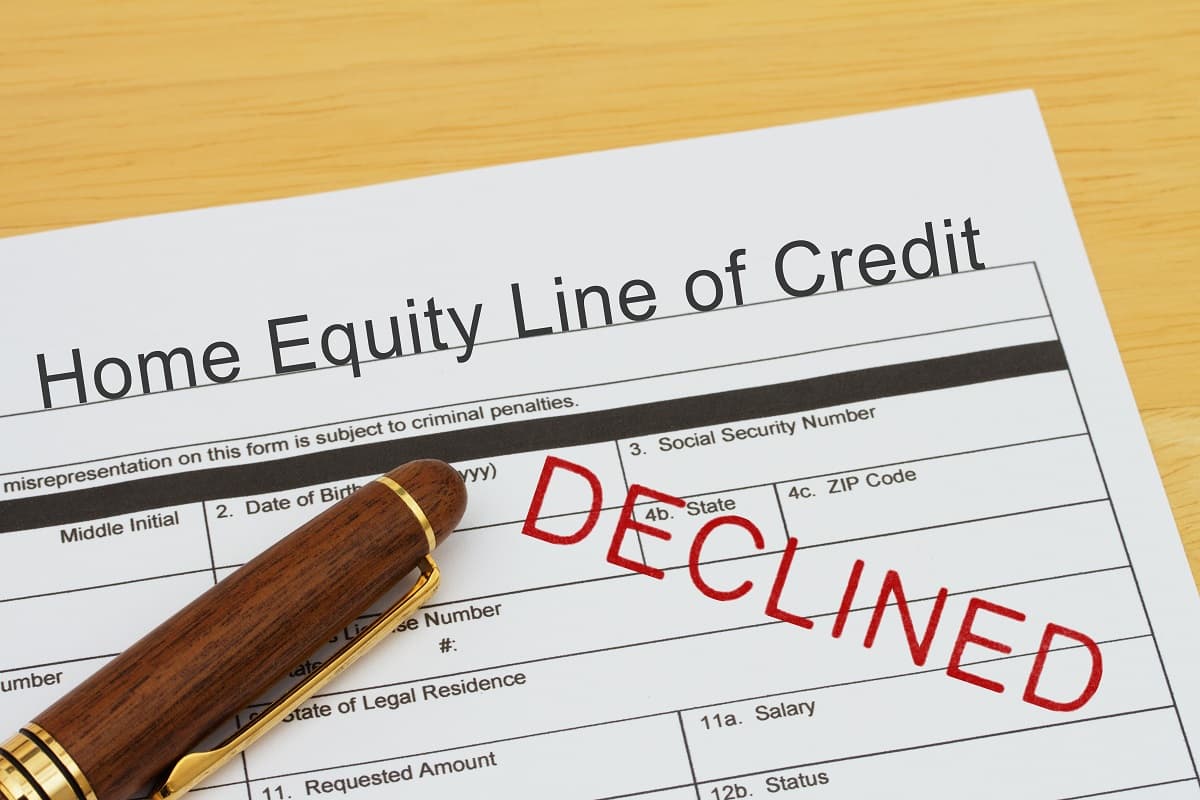
Home equity can be a homeowner’s most valuable asset—and home equity loans provide a way to benefit from this home equity without having to sell the property first. But because of the benefits a home equity loan provides, there are also specific, somewhat limiting qualifications homeowners must meet to be eligible.
So, what disqualifies you from getting a home equity loan? Read on as we explore the advantages of home equity loans while paving the path to eligibility.
What Is a Home Equity Loan?
First, a quick fresher on home equity. Otherwise known as your home value minus what you currently owe on the property, home equity is the portion of your home that you own outright. With every mortgage payment, your share of equity grows steadily larger, giving you more equity to work with in the event that you sell your home or apply for a home equity loan.1
There are two main financial tools that allow you to borrow money using your home equity as collateral: home equity loans and home equity lines of credit (HELOCs). With a home equity line of credit, borrowers can draw from a set loan amount over a set period of time (much like a credit limit) and begin repayment once the draw period is over. With a home equity loan, however, funds are distributed as a one-time lump sum. These are what we’ll be examining below.
Home equity loans have myriad applications. They can be used for debt consolidation, allowing homeowners to pay off other high-interest loans with their home equity. They can help fund an education or act as capital for a business venture. They can even be used to finance home improvement projects, thus using home equity to increase home equity.
Common Disqualifications for Home Equity Loans
Unfortunately, for many homeowners, simply having accrued home equity is not enough to meet home equity loan requirements. If you’re considering applying for a home equity loan, take note of these potential barriers that can keep you from leveraging your equity via this tool.
Poor Credit History or Low Credit Score
A credit score is one of the biggest factors influencing home equity loan eligibility, with many lenders requiring a 680 or higher (a “good” score under FICO’s guidelines) to be approved. With that said, the strength of your other financials may outweigh a lower credit score—just as the lack of a solid credit history can bring down your chances of getting approved.2
Home equity lenders will look at things like your open accounts and their current ages, your track record with on-time payments, and your past credit inquiries when making their decision. All of these details give lenders a clearer idea of the type of borrower you’ll be and inform them as to whether you’re likely to repay your loan.
High Debt-to-Income Ratio
A high debt-to-income (DTI) ratio can also hurt home equity loan applicants. This ratio is calculated using your total recurring monthly debt payments—student loans, car payments, credit card bills and the like—along with your pre-tax monthly income. The more of your monthly income is earmarked for debt repayment, the higher your DTI is.
Home equity lenders will typically draw the line at 43 percent, disqualifying home equity loan applicants whose monthly debt repayment equals or exceeds 43 percent of their monthly income.3 For a single applicant grossing $5,000 each month, this would mean no more than $2,100 of that could go toward debt repayment to remain eligible for loan approval.
Insufficient Home Equity
Home equity loan approval will also hinge on your available equity, but the amount required may be lower than you think. In most cases, lenders will be looking for at least 20 percent to qualify as sufficient equity. This means that, if you put what used to be the standard 20 percent down, you may already be eligible for a home equity loan. But the more substantial home equity you have, the more compelling your application (and the better your situation) will be.
Recent Foreclosure or Bankruptcy
Lenders want to know if you’re likely to make good on your end of the deal by repaying any money borrowed. For this reason, recent foreclosures or bankruptcy filings on your record can severely harm your chances of getting approved for a home equity loan. What’s more: bankruptcies and foreclosures can also lead to a lower credit score, making it even more challenging to get approved for a home equity loan.
Low or Unstable Income
While there’s not a set income requirement for home equity loan eligibility, lenders will take your income level and stability into consideration. As with any other type of loan, lenders will request that you submit paystubs or other proof of income. If there are noticeable gaps in income or if your income fluctuates significantly, lenders will likely make note of this detail.
Further, your income level will directly impact your debt-to-income ratio. While two home equity loan applicants may have the same monthly debt obligation of $2,100, a $250 difference in gross monthly income can put one applicant at 42 percent DTI while the other sits at a potentially disqualifying 44 percent.
Liens or Judgments on the Property
If you fail to repay a debt, your debtor may place a judgment or lien on your property—only to be removed once the debt is cleared. Until then, these liens can hurt your chances of getting approved for a home equity loan, as they signify to lenders that you may be unlikely to make regular on-time payments.
The emergence of any of these detractors during the application process will likely hurt your chances of getting approved for a home equity loan. However, lenders will look at your overall profile before making a decision, meaning you won’t know your true eligibility status until you speak directly with a lender or submit a loan application.
Ready to leverage your
home equity?
Click here
Steps to Improve Your Eligibility for a Home Equity Loan
There’s a common trait among many of the disqualifying factors listed above: They’re not permanent conditions. This means that with a plan and some determination (and a healthy dose of budgeting), you can improve your chances of getting approved for a home equity loan.
Here are some of the best ways to boost your approval likelihood and meet home equity loan requirements.
Work on Credit Repair
If you can only do one thing to effectively improve your position, that one thing should be rehabilitating your credit.
This factor heavily influences your chances of getting approved for a home equity loan — with a 680 credit score being one of the few hard requirements from lenders. However, the benefits of improving your credit go well beyond this specific use case. Achieving a higher credit score can create opportunities to refinance, which can, in turn, allow you to accrue home equity faster, improving your odds of approval even more.
Put it into practice: If you were to focus your energy on repairing your credit, how would you do it? In the short term, you can start by requesting credit limit increases from your credit card issuers (if applicable) and lowering your credit utilization to 30 percent. Then, commit yourself to paying all of your bills on time if you aren’t already.4 These actions, along with creating healthy and lasting habits around your credit usage, can dramatically improve your overall financial situation.
Increase Income or Reduce Debt
Arguably more challenging but no less effective than repairing your credit, increasing your income while chipping away at personal debt can also aid in your home equity loan eligibility.
This strategy specifically targets your debt-to-income ratio, and if you can boost your monthly pre-tax income while also paying down your recurring debts, you’ll be able to watch this ratio shrink before your very eyes.
Put it into practice: Even incremental changes to your income and debt can have a big impact. On the income front, consider taking on a “side hustle” or an additional source of income. A part-time job, a small online business, or a single shift per week spent driving for a rideshare or food delivery service can all help put some extra money in your pocket.
At the same time, identify recurring debts that you may be able to easily eliminate. If you’re making minimum payments to service your interest-heavy credit card debt, adjust your budget to pay the balance in full. This action, along with increasing your income, can go a long way toward helping you get approved for a home equity loan.
Build More Equity in Your Home
Lastly, one of the most straightforward ways to improve your odds of approval is to accrue more home equity.
If you’re below the 20 percent threshold outlined by most lenders, you’ll likely need to accumulate more home equity before applying. But even if comfortably above this line, a greater share of home equity can pay off (especially if you’re limited by some of the other qualifiers listed above.)
Put it into practice: There’s no magic wand to help you instantly build more equity — rather, the trick is continuing to make on-time mortgage payments and steadily growing your home equity pile. But there are many ways to build equity in a home and make this gradual process a bit easier. For example, refinancing to a lower interest rate while continuing to make your same monthly payment can help you accrue equity faster by decreasing the amount you pay in interest.
Truehold’s Alternative to Home Equity Loans
If home equity is a homeowner’s greatest asset, a home equity loan can be the key to unlocking this asset. But for someone with a turbulent financial history, the various disqualifying factors outlined above can make this tool feel out of reach. Fortunately, when it comes to unlocking home equity, there’s more than one key.
Truehold’s sell-and-stay transaction has become an increasingly attractive alternative among homeowners looking to access their home equity without jumping through countless hoops to do so. This approach brings together two simple transactions: a residential sale and a lease. You sell your home in exchange for your equity and then continue living there as a renter while meeting the terms of your rental agreement.*
While you enjoy life as a renter, you can plan your next move, shop for your next home, and plan for retirement while finally doing some long-awaited travel. Now that your home equity is in your hands, so is your future.
Want to learn more about Truehold’s alternative to home equity loans? Contact Truehold today at (866) 429-3001 to see if a sell-and-stay is right for you.
Disclaimer*: After the home sale, you must comply with the terms of your lease to continue living in the home. This includes making timely payments on your rent for your minimum lease term (which ranges from 6 – 24 months).
Sources:
1. Consumer Financial Protection Bureau. What is a home equity loan? https://www.consumerfinance.gov/ask-cfpb/what-is-a-home-equity-loan-en-106/
2. Experian. Can You Get a Home Equity Loan With Bad Credit? https://www.experian.com/blogs/ask-experian/what-credit-score-do-i-need-to-get-a-home-equity-loan/
3. Investopedia. What Is the Debt-to-Income Ratio You Need for a Home Equity Loan? https://www.investopedia.com/debt-to-income-home-equity-loan-5323722
4. NerdWallet. Real Ways to Improve Your Credit Fast. https://www.nerdwallet.com/article/finance/raise-credit-score-fast

Nicolas Cepeda
Financial Analyst at Truehold - A Specialist in Real Estate Finance
Nicolas Cepeda is a financial analyst with Truehold’s Real Estate Investment team, responsible for analytics and strategic decision making in the management of Truehold’s real estate portfolio. Nicolas has dedicated his career to residential real estate and is particularly focused on evolving solutions for homeowners and tenants. Nicolas holds a Masters in Engineering Management with a focus in Real Estate Finance and a range of experiences working with leading residential investors. Nicolas is a family-oriented individual and the proud uncle of 2 nieces. On the weekends you can find Nicolas on the soccer field or at his piano.
.jpg&w=3840&q=75)

.jpg&w=3840&q=75)
.jpg&w=3840&q=75)